
Shoplifting Detection: 5 Behaviors AI Can Identify in Real Time
Shoplifting is no longer just about someone slipping an item into a pocket. Modern retail theft is organized, subtle, and designed to bypass traditional security measures. While standard CCTV systems record what happens, they rarely help staff act in the moment. This is where AI-powered shoplifting detection changes the game. Instead of passively capturing video, AI analyzes behavior in real time—spotting patterns that strongly indicate theft risk and alerting staff before losses occur.
Below are five key shoplifting behaviors AI can detect as they happen, and why this matters for modern retailers.
1. Repeated Shelf Visits Without Purchase Intent
One of the earliest indicators of potential shoplifting is repetitive interaction with the same product area.
AI systems monitor:
Multiple returns to the same shelf
Long engagement without selecting an item
Back-and-forth movement between aisles
While a single visit is normal, repeated visits combined with hesitation or scanning behavior can signal preparation for theft. AI recognizes these patterns far more consistently than human observers, especially during busy store hours.
Why it matters? Early detection allows staff to increase presence or offer assistance—often enough to prevent theft altogether.
2. Item Concealment Motions
AI shoplifting detection excels at recognizing body movements associated with concealment, such as:
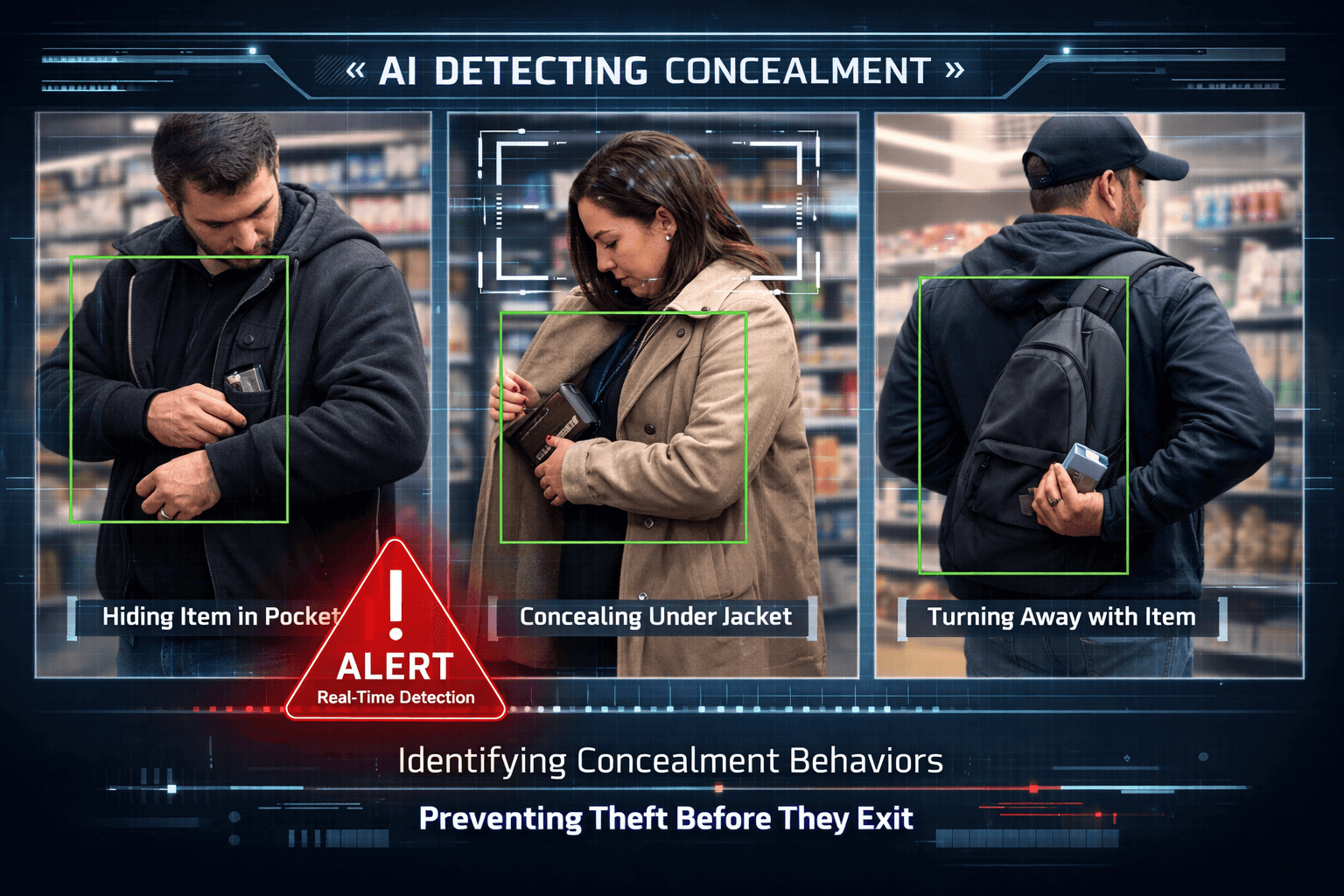
AI shoplifting detection excels at recognizing body movements associated with concealment, such as:
Placing items into pockets, bags, or clothing
Shielding actions with jackets or baskets
Turning away from aisles during item handling
These motions are identified based on behavioral patterns, not assumptions about individuals. This reduces false accusations while increasing accuracy.
Why it matters? Real-time alerts allow intervention before the suspect exits the store, rather than reviewing footage after the loss.
3. Unusual Bag or Clothing Interaction
Professional shoplifters often use:
Oversized bags
Modified clothing
Strollers or personal items for concealment
AI monitors how objects interact with merchandise, flagging unusual behavior such as:
Frequent bag opening near shelves
Items disappearing from view without reaching checkout
Clothing adjustments immediately after handling products
Why it matters? These behaviors are difficult for staff to notice consistently, especially across multiple aisles.
4. Loitering Without Purchase Behavior
Loitering alone isn’t theft—but loitering without purchase intent, combined with certain movement patterns, can indicate risk.
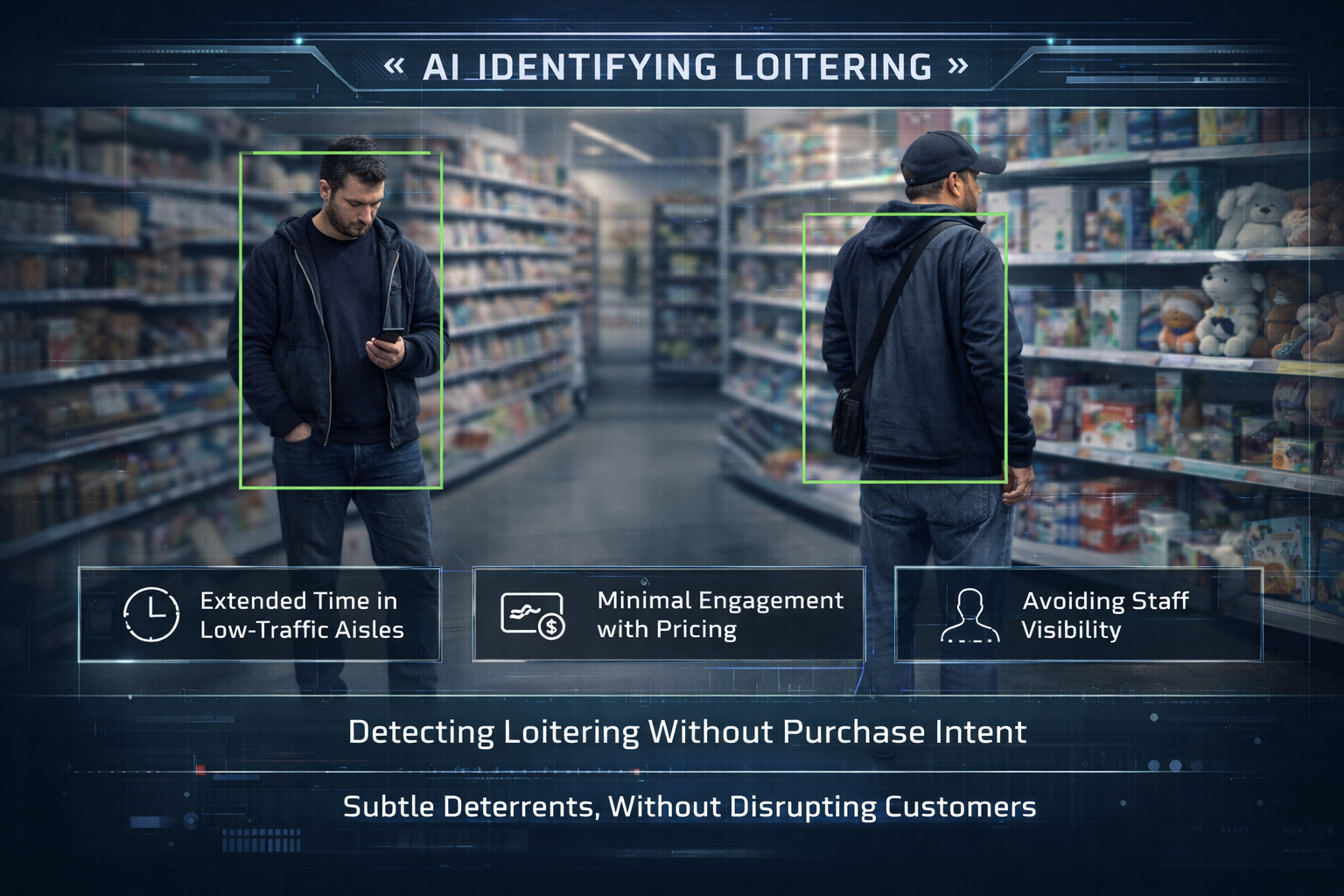
AI can detect:
Extended time spent in low-traffic aisles
Minimal engagement with pricing or product comparison
Movement patterns that avoid staff visibility
Unlike humans, AI doesn’t get distracted or fatigued, making it especially effective during peak hours or overnight shifts.
Why it matters? Retailers can respond with subtle deterrents, such as staff presence, without disrupting genuine customers.
5. Repeat Offenders and Persons of Interest (POIs)
Advanced shoplifting detection systems can identify known repeat offenders the moment they enter the store—when legally permitted and properly configured.
Using AI-powered recognition:
Past incidents inform future prevention
Staff receive discreet alerts
Risk is identified before theft occurs
This shifts loss prevention from reaction to true prevention.
Why it matters? Repeat offenders account for a disproportionate amount of retail shrinkage. Early awareness drastically reduces losses.
Why AI-Based Shoplifting Detection Is More Effective
Traditional CCTV answers one question: What happened? AI answers a more important one: What’s about to happen?
With AI-powered shoplifting detection, retailers gain:
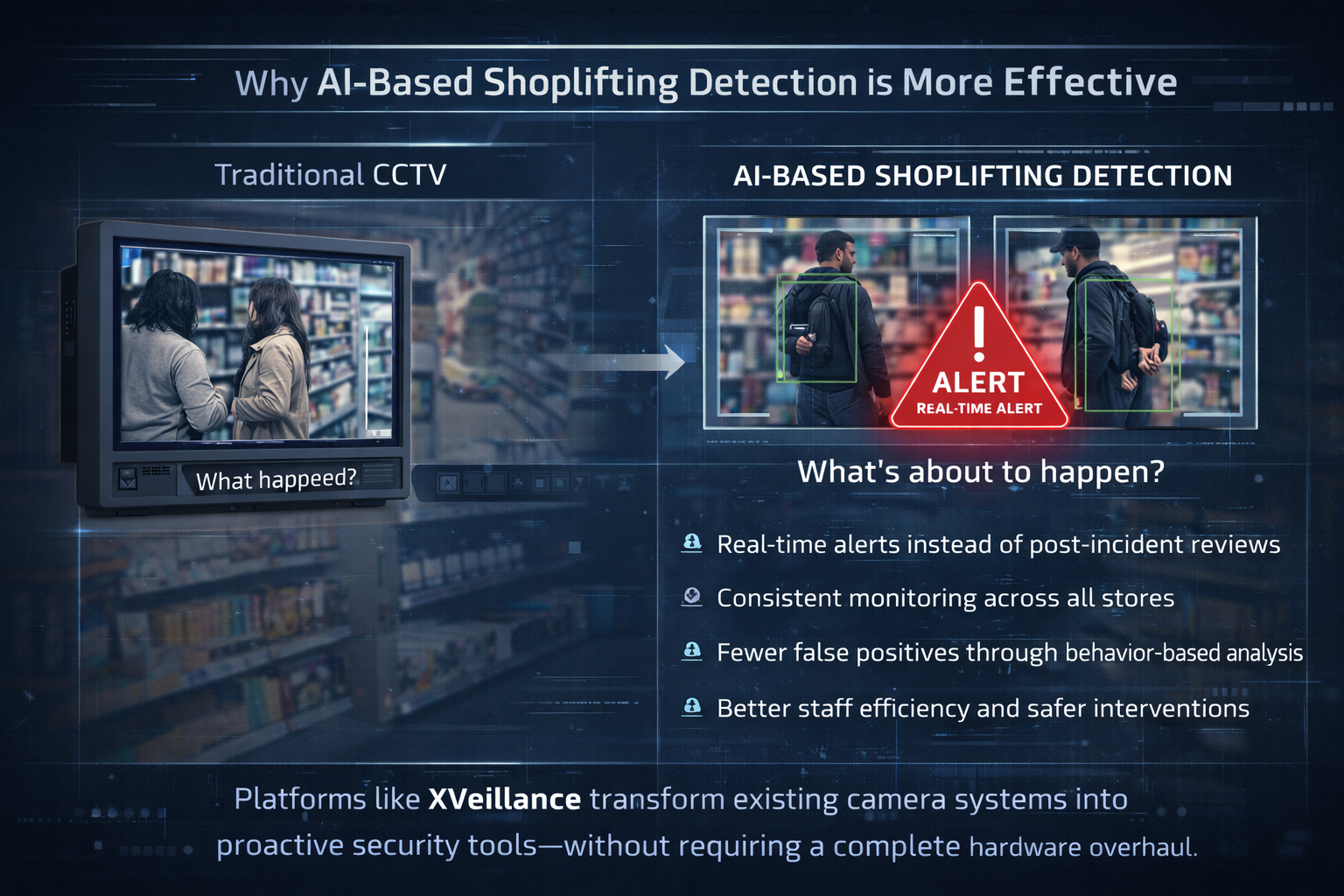
Real-time alerts instead of post-incident reviews
Consistent monitoring across all stores
Fewer false positives through behavior-based analysis
Better staff efficiency and safer interventions
Platforms like XVeillance transform existing camera systems into proactive security tools by adding an intelligent AI layer to the infrastructure retailers already have in place. Instead of relying on cameras solely for recording and post-incident review, AI continuously analyzes video feeds to detect behavioral patterns associated with theft in real time.
Why it matters? Retailers can respond with subtle deterrents, such as staff presence, without disrupting genuine customers.
Final Thoughts
Shoplifting has evolved—and retail security must evolve with it. By identifying behavioral patterns in real time, AI enables retailers to prevent theft before it happens, protect staff, and reduce shrinking without disrupting the customer experience.
Shoplifting detection is no longer about watching screens—it’s about acting on insights.
Start protecting yourself and your business from shoplifting