
Balancing Security and Privacy: How to Implement Smart Surveillance Ethically
Retailers today face increasing pressure to reduce shrinkage while maintaining customer trust. Modern AI retail security solutions are transforming how stores approach loss prevention — shifting from reactive investigations to proactive prevention. But as shoplifting detection becomes more intelligent and automated, businesses must carefully balance security effectiveness with ethical responsibility.
Smart surveillance is powerful. Ethical implementation is essential.
The Rise of AI Retail Security in Modern Stores
Traditional CCTV systems required hours of manual footage review after incidents occurred. Today, AI retail security platforms use behavior-based analytics to detect suspicious activity in real time.
This evolution in shoplifting detection allows retailers to:
Identify concealment behaviors as they happen
Alert staff before losses escalate
Reduce reliance on post-incident investigations
Improve overall store safety
However, advanced analytics must be deployed responsibly. Ethical surveillance isn’t just about compliance — it’s about long-term trust.
Why Ethical Shoplifting Detection Matters
Customers are more aware than ever of how businesses use surveillance technology. Employees expect fair and transparent monitoring practices. Regulators continue tightening data protection laws globally.
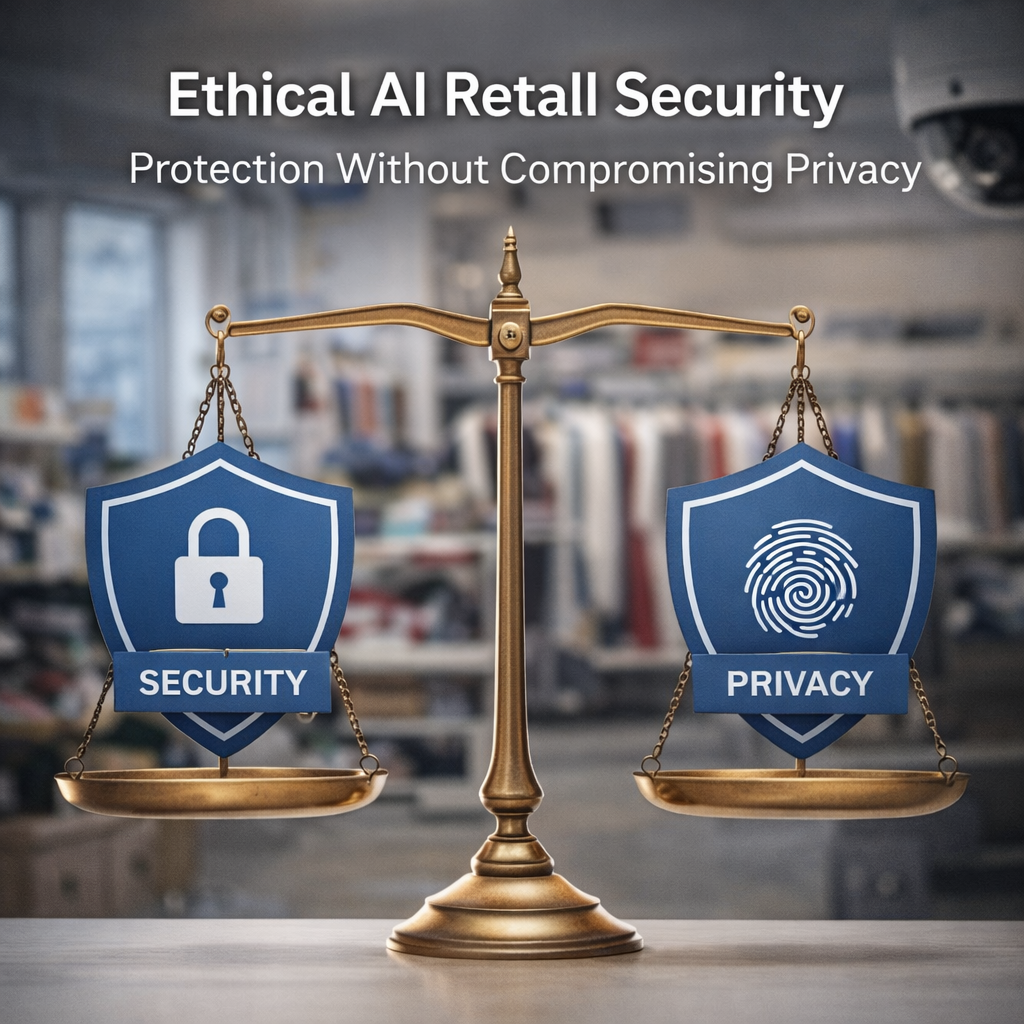
Without clear governance, AI-driven surveillance can create concerns around:
Data misuse
Excessive monitoring
Profiling
Privacy violations
Ethical AI retail security ensures that stores prevent theft without compromising the dignity and rights of customers and staff. By implementing clear policies, responsible data handling, and transparent communication, retailers can build trust while still benefiting from advanced security technologies.
When businesses approach surveillance responsibly, AI becomes a tool for protection rather than intrusion. Security teams can focus on preventing theft and improving store safety while maintaining respect for individual privacy.
Security and privacy should work together, not against each other.
1. Focus on Behavior-Based Shoplifting Detection
The most responsible AI systems focus on behavior patterns, not personal identity.
Instead of relying on invasive facial recognition or individual tracking, ethical shoplifting detection analyzes:
Suspicious concealment gestures
Unusual dwell times
Coordinated activity
Exit-without-payment behavior
By concentrating on actions rather than identities, retailers minimize privacy risks while maintaining strong security outcomes. This behavior-based approach represents the next generation of responsible AI retail security.
2. Be Transparent About AI Retail Security Practices
Transparency builds trust with both customers and employees.
Retailers should:
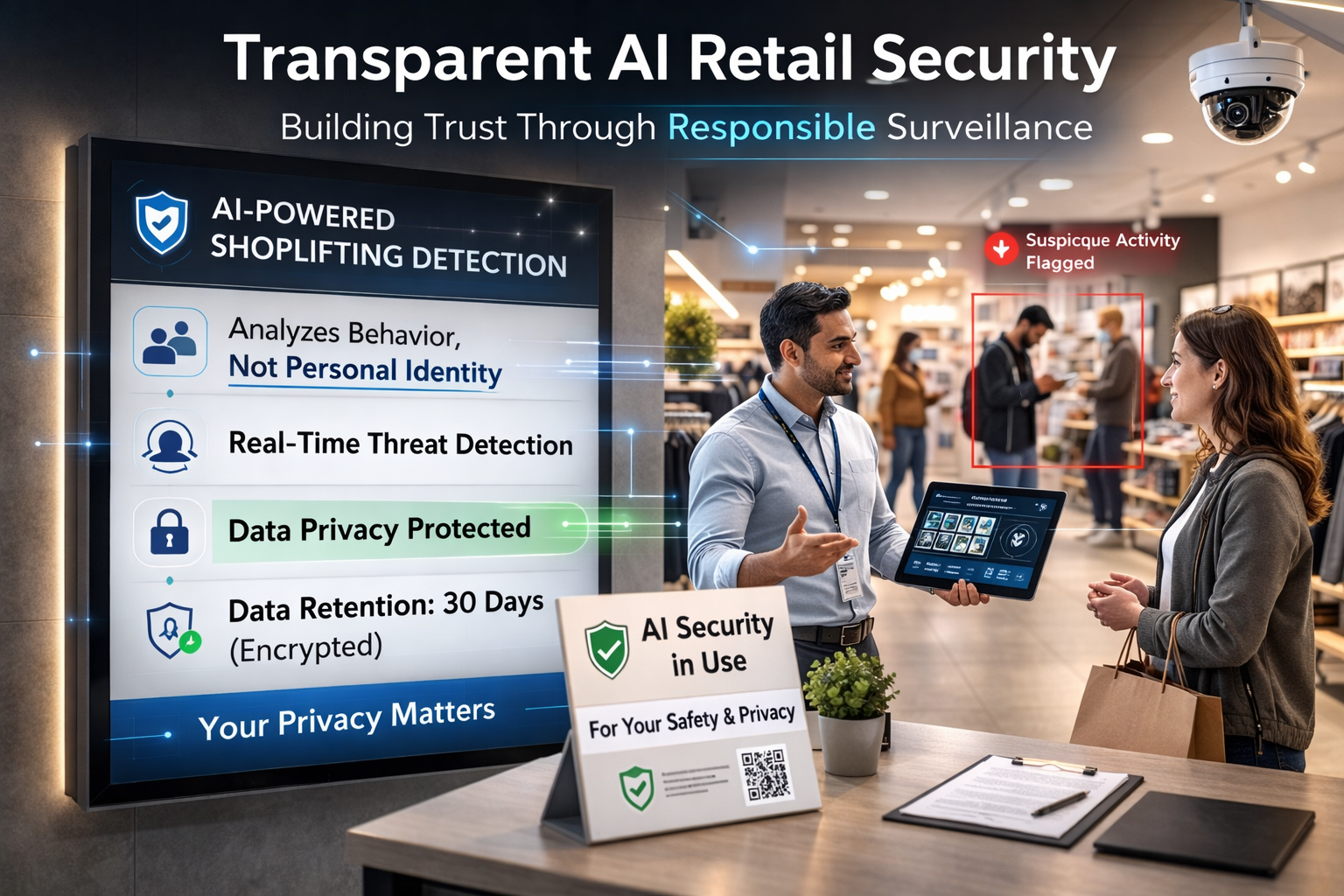
Clearly communicate that AI-assisted shoplifting detection is in use
Explain that systems analyze behaviors, not personal profiles
Provide visible privacy notices
Outline data retention and protection policies
When customers understand that AI retail security is designed to protect them — not intrude on them — resistance decreases significantly.
3. Minimize Data Collection and Retention
Ethical surveillance follows the principle of data minimization:
Collect only what is necessary for shoplifting detection
Avoid storing excessive personal data
Limit access to authorized personnel
Use secure, encrypted storage systems
Because modern AI retail security platforms prioritize real-time alerts, they reduce the need for long-term footage storage, lowering overall privacy risk.
4. Maintain Human Oversight in Shoplifting Detection
AI should assist, not replace human decision-making.
While automated systems can flag suspicious activity, trained staff should always review alerts and determine appropriate action. This ensures:
Reduced false positives
Context-aware responses
Fair treatment of customers
Ethical intervention practices
Responsible AI retail security combines automation with accountability.
5. Ensure Compliance With Data Protection Regulations
Retailers deploying AI-driven shoplifting detection must comply with applicable privacy regulations, such as GDPR, CCPA, or other regional data protection laws.
Compliance includes:
Proper data handling procedures
Clear documentation
Controlled data access
Defined retention timelines
Ethical AI retail security protects not only inventory, but also the organization from regulatory risk.
6. Build Privacy Into AI Retail Security by Design
The most forward-thinking retailers implement “privacy by design,” embedding safeguards directly into their surveillance architecture.
This includes:
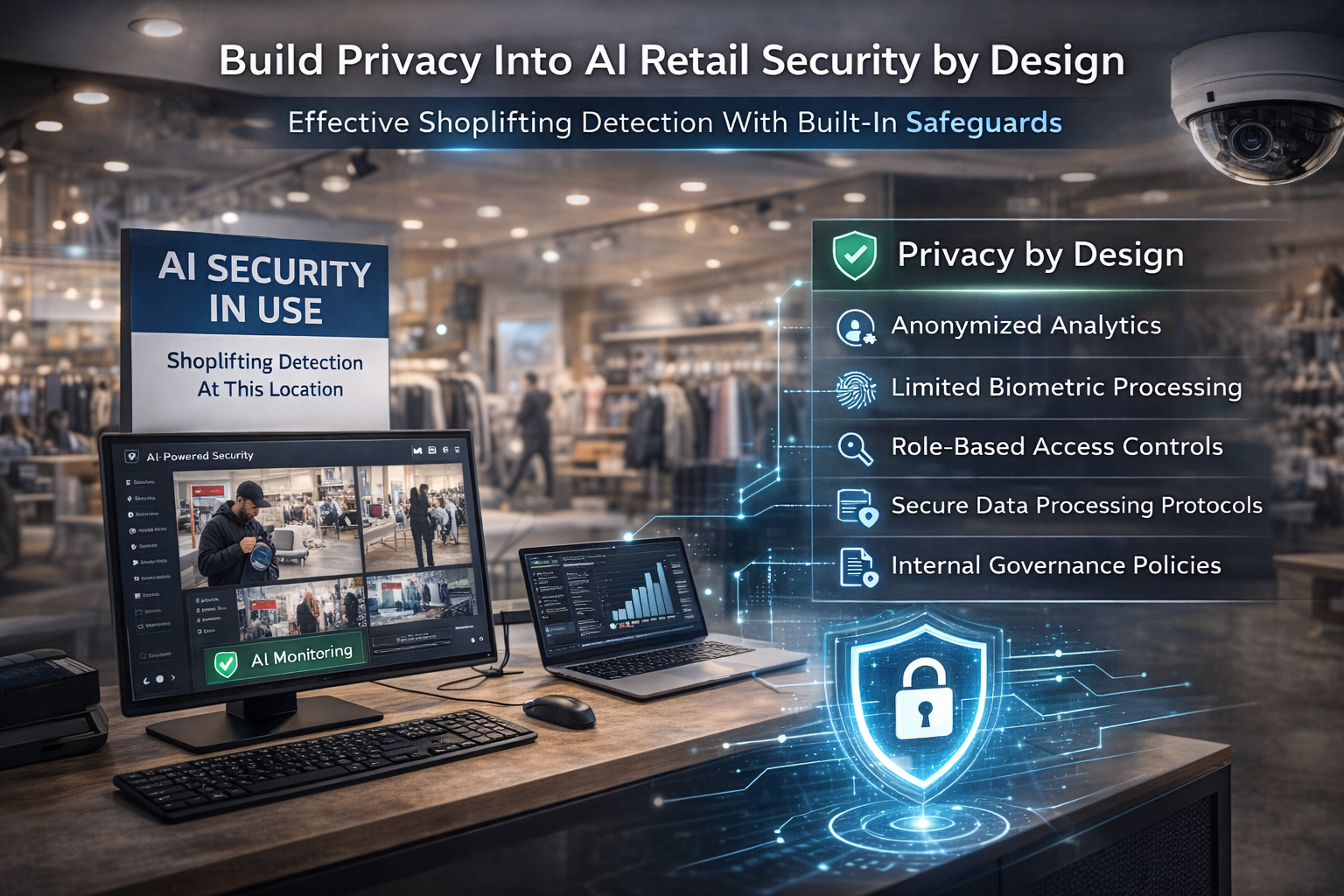
Anonymized analytics
Limited biometric processing
Role-based access controls
Secure data processing protocols
Internal governance policies
When privacy is built into the system from day one, shoplifting detection becomes both effective and sustainable.
Ethical AI Retail Security as a Competitive Advantage
Consumers want safe stores. Employees want protection from theft-related risks. But everyone expects their privacy to be respected.
Retailers that implement ethical shoplifting detection solutions can:
Reduce shrinkage
Improve staff efficiency
Enhance in-store safety
Strengthen brand reputation
Build long-term customer trust
The future of retail security belongs to businesses that balance prevention with responsibility.
The Future of Responsible Shoplifting Detection
As AI retail security technology continues evolving, the retailers that lead with transparency, fairness, and ethical governance will stand out. Smart surveillance is no longer optional in high-risk retail environments. But ethical, privacy-conscious shoplifting detection?
That’s what defines sustainable innovation. Retailers don’t have to choose between protection and privacy.
With the right approach, they can achieve both, and so could you if you click here.