
Before vs After: Life Without vs With AI Theft Prevention
Retail security has long relied on cameras, staff vigilance, and post-incident reviews. But as shoplifting becomes more organized and frequent, many retailers are realizing that traditional approaches are no longer enough.
The difference between reactive surveillance and AI-powered theft prevention is not incremental — it’s transformational. Here’s what that shift actually looks like in practice.
Before: Traditional CCTV and Reactive Security
Limited Visibility, Delayed Action
In a typical store setup, CCTV cameras continuously record activity — but without intelligence. Suspicious behavior may happen in plain sight, yet it often goes unnoticed in real time.
When theft is discovered, staff must:
review hours of footage
identify the moment of the incident
try to understand what went wrong
By then, the opportunity to act has already passed.
Dependence on Human Attention
Store employees are responsible for multiple tasks — assisting customers, managing inventory, and monitoring the floor. Constantly watching for suspicious behavior is unrealistic.

Even with live monitoring, it’s nearly impossible to:
track multiple individuals simultaneously
identify subtle behavioral cues
react quickly enough to prevent incidents
Inconsistent Theft Detection
Without automated shoplifting detection, outcomes depend heavily on chance:
Was someone watching at the right time?
Did staff recognize the behavior?
Was the footage reviewed quickly enough?
This inconsistency leads to missed incidents and ongoing losses. Without intelligent identification, known shoplifters can return to stores without being recognized. Staff may suspect something, but lack the tools to confirm it in real time.
After: AI-Powered Theft Prevention with XVeillance
Real-Time Shoplifting Detection
With AI-powered systems, surveillance shifts from passive recording to active monitoring. XVeillance continuously analyzes video feeds to identify suspicious gestures and behavior patterns associated with theft — as they happen.
This includes:
concealment attempts
unusual hand movements
product interactions that match high-risk patterns
Instead of discovering theft later, stores can respond immediately.
Instant Alerts, Immediate Action
When suspicious activity is detected, the system:
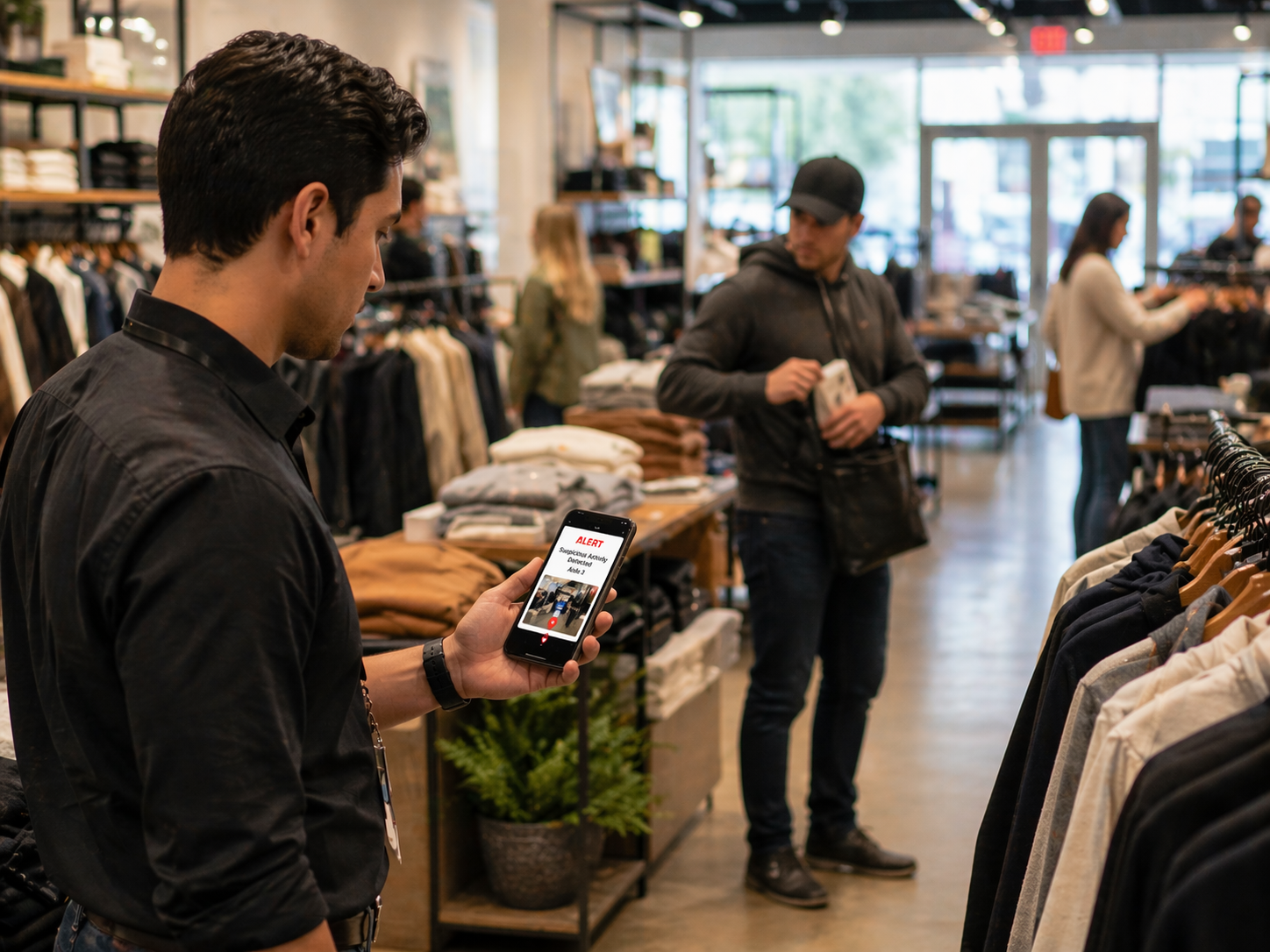
sends real-time alerts to staff
provides context and location
enables quick, informed intervention
This reduces response time from minutes (or hours) to seconds.
Consistent, Scalable Monitoring
AI doesn’t get distracted, tired, or overwhelmed. It monitors:
every camera
every aisle
every customer interaction
simultaneously — ensuring consistent shoplifting detection across the entire store.
Recognition of Persons of Interest
AI enables identifications of known or flagged individuals upon entry. With XVeillance:
repeat offenders are detected instantly
staff receive discreet notifications
preventive measures can be taken early
This significantly reduces repeat incidents.
What This Means for Retailers
The shift to AI-powered theft prevention isn’t just about technology — it’s about changing how stores operate. Retailers benefit from:
Reduced shrinkage through early intervention
Improved staff efficiency, focusing only on real risks
Faster decision-making with actionable insights
Stronger in-store security presence

Most importantly, it transforms security from a cost center into a proactive business tool. In traditional setups, retailers are always one step behind — reacting to theft after it happens.
With AI, they move ahead of the problem.
XVeillance enables stores to:
detect risk in real time
act before incidents escalate
maintain control over store operations
Conclusion: A New Standard for Retail Security
The difference between “before” and “after” is simple:
👉 Before: You record what happened
👉 After: You prevent it from happening
As shoplifting evolves, so must the tools used to stop it.
AI-powered shoplifting detection and theft prevention are no longer optional — they are becoming the new standard for modern retail, and you can be a part of that.