
The Psychology of Shoplifting: What AI Detects Before Theft Happens
Most shoplifting doesn’t begin when someone slips a product into a pocket or bag. It starts much earlier. A customer repeatedly scans the environment instead of looking at products. Someone circles the same aisle multiple times without making a purchase decision. A group separates and reconnects throughout the store while one person distracts the staff.
Small behaviors, almost invisible in isolation, often appear minutes before theft actually happens. The problem is that in a busy retail environment, these warning signs are incredibly difficult for humans to detect consistently. Retail employees are already balancing customer service, inventory management, register operations, and general store activity all at once.
Even experienced security personnel can miss subtle behavioral cues during peak hours or crowded periods. Traditional CCTV systems don’t solve this problem either; they simply record footage that is usually reviewed after the merchandise has already been stolen. This is exactly why AI-powered surveillance is transforming modern retail security. Instead of functioning as passive recording systems, intelligent surveillance platforms can analyse behavioural patterns in real time, helping retailers identify suspicious activity before theft escalates into actual loss.
Why Human Observation Has Natural Limits?
Human attention is selective. No matter how experienced a security team may be, continuously monitoring every customer, aisle, and movement across an entire store is nearly impossible. And modern shoplifting tactics make that challenge even harder.
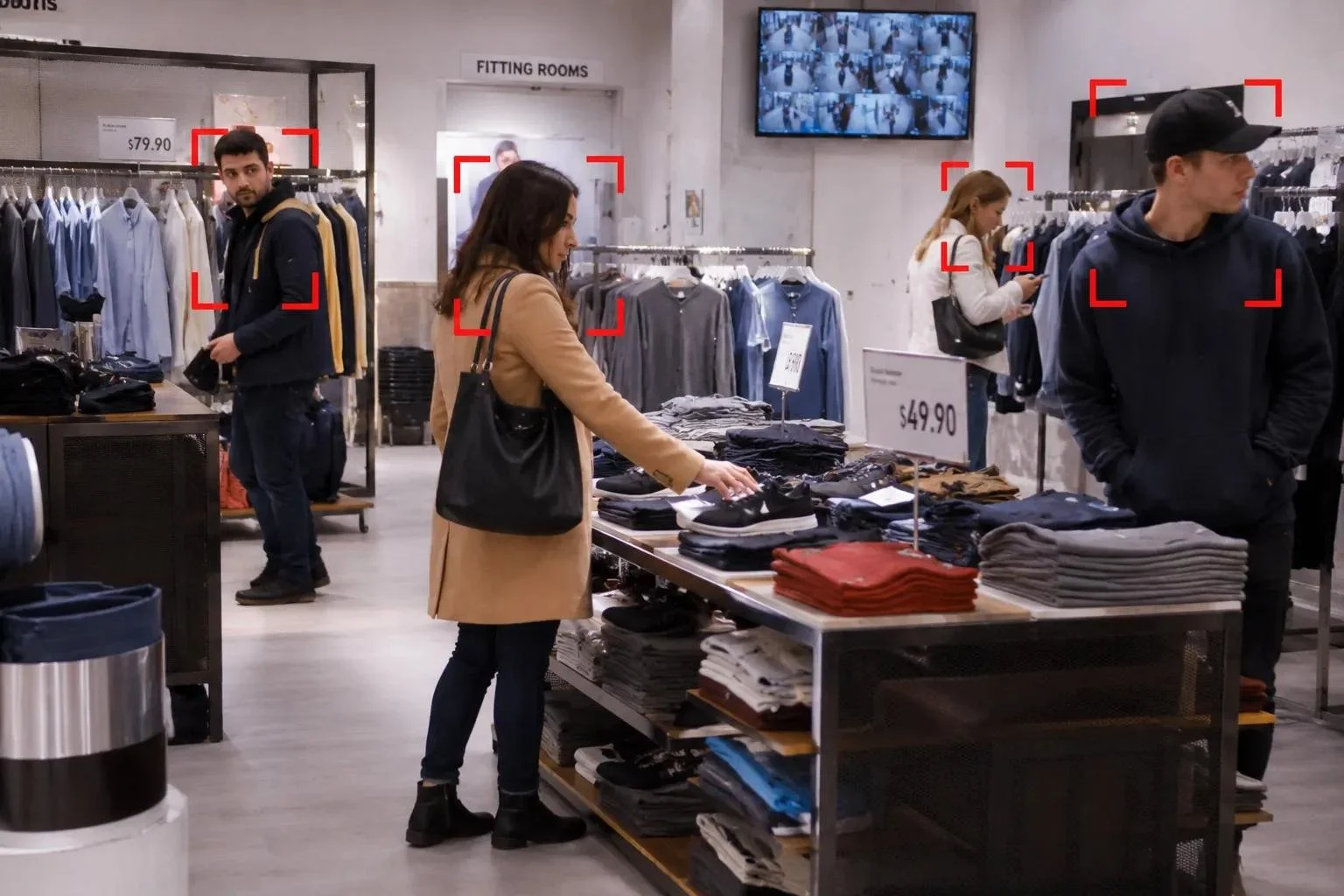
Today’s retail theft is often fast, coordinated, and intentional. Many incidents involve distraction techniques, organised groups, or carefully timed concealment actions designed to avoid detection. Potential shoplifters often display subtle behavioural patterns, such as:
Avoiding eye contact with staff
Scanning cameras or exits
Lingering near products without genuine purchase intent
Making unusual concealment movements
Working alongside distraction partners
How AI Identifies Suspicious Behavior
Modern AI surveillance systems are trained to recognise behavioural anomalies that differ from ordinary shopping activity. Rather than simply “watching” footage, AI continuously analyses movement patterns, object interactions, body positioning, and behavioral sequencing across all connected cameras simultaneously.
This allows the system to detect patterns that human observers may never notice in real time. For example, AI can identify different behavior like repeated pacing in specific aisles, excessive interaction with products without purchase progression, rapid directional changes, coordinated movement between multiple individuals, unusual product-to-bag transfers, concealment gestures involving clothing, bags, or blind spots, and suspicious hand movements near shelves or merchandise.
One of the biggest advantages of intelligent surveillance is gesture recognition. Many concealment actions happen extremely quickly, sometimes within seconds. A person may briefly shield merchandise with clothing, position themselves in camera blind spots, or transfer products in ways that appear natural to nearby customers.
These micro-behaviors are easy for human staff to overlook, especially when monitoring dozens of screens or managing in-store responsibilities. AI systems continuously analyse these behavioural signals without fatigue, helping retailers detect elevated risk much earlier in the process.
The Shift From Recording Incidents to Preventing Them

Traditional CCTV was designed for evidence collection. Retailers reviewed footage after losses occurred, often using recordings only for investigations or insurance purposes. By the time suspicious activity was identified, the theft had already happened. AI-powered surveillance changes that approach completely. Instead of asking, “What happened?”, intelligent systems focus on a far more important question: “What is likely about to happen?”
When suspicious activity crosses predefined risk thresholds, the system can immediately send real-time alerts to security teams, notify staff through mobile devices, highlight the exact camera location of the capture, organise relevant video clips, and automatically escalate repeated suspicious behaviour.
AI-powered systems provide several major advantages over manual monitoring, like continuous analysis across every camera feed, real-time behavioural detection, reduced reliance on constant human observation, faster incident response, fewer missed warning signs, and more efficient security operations. Importantly, AI is not replacing retail employees or security teams. It is enhancing their awareness. Instead of requiring staff to manually monitor endless footage, intelligent systems prioritise the moments that actually require attention. This allows teams to respond more effectively while improving overall store safety and operational efficiency.
How XVeillance Helps Retailers Detect Theft Earlier
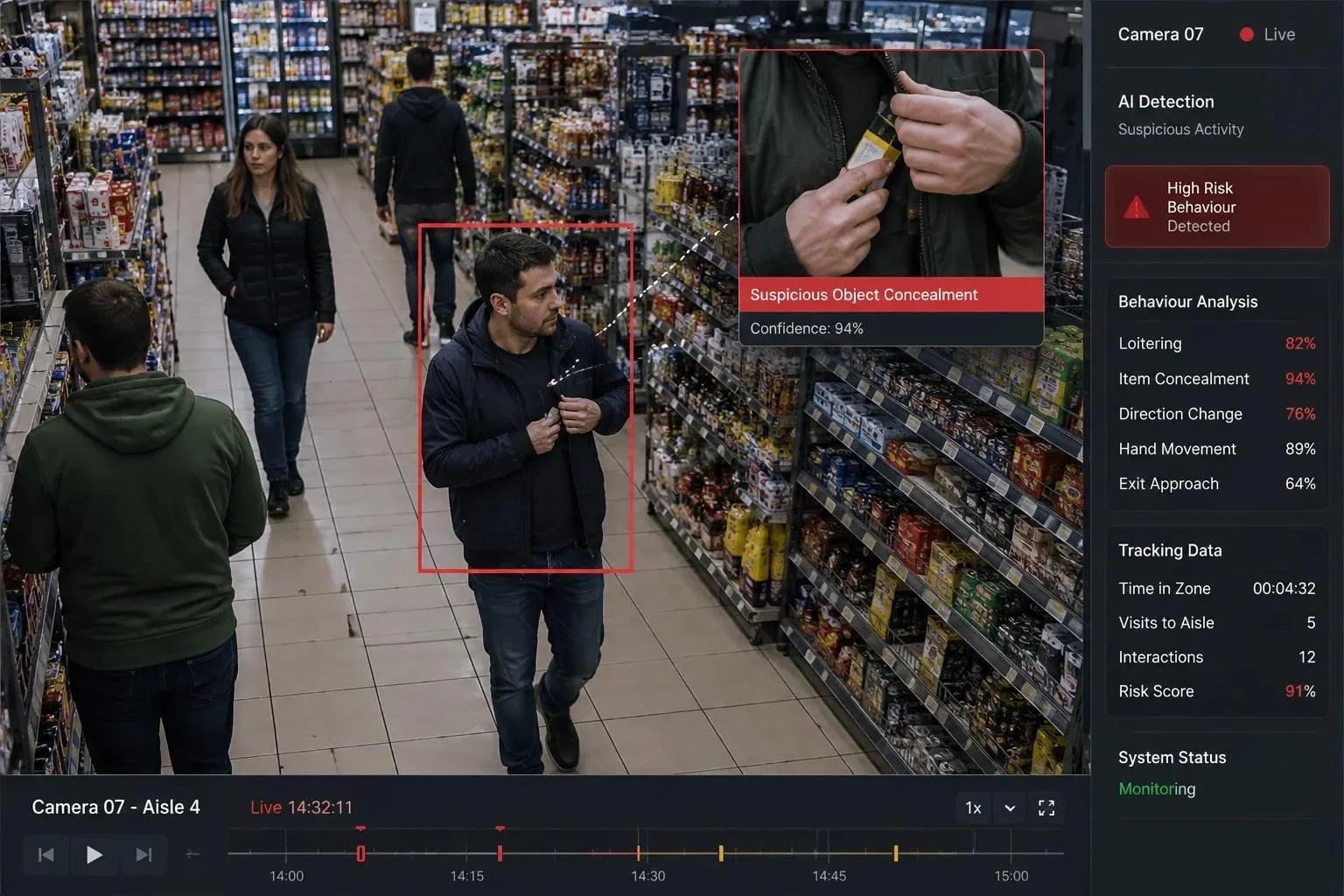
Modern retail security requires more than passive cameras and delayed investigations. Platforms like XVeillance are built specifically to help retailers detect suspicious behaviour earlier, respond faster, and prevent incidents.
XVeillance combines:
real-time suspicious activity detection
Face ID recognition
centralized monitoring
instant alerting
proactive threat prevention tools
This combination gives retailers a much clearer understanding of what is happening inside their stores in real time. While behavioural AI identifies suspicious movement patterns and concealment-related activity, Face ID capabilities help retailers recognise repeat offenders and known threats more efficiently across multiple locations. Instead of relying entirely on staff intuition or reviewing footage after a loss occurs, retailers can act immediately based on intelligent, real-time insights.
That difference is becoming increasingly important as retail theft continues to evolve. Because modern retail security is no longer just about recording incidents after they happen. It’s about recognising intent early, responding faster, and stopping losses before they impact the business.
The goal is no longer just to capture evidence, but to stop the loss before it happen, the future of retail security starts here.