
The Business Intelligence Hidden Inside Security Camera Footage
When most retailers think about security cameras, they think about theft prevention.
CCTV systems have long been used to monitor stores, review incidents, and provide evidence when theft occurs. But with the rise of artificial intelligence, security cameras have evolved into something much more powerful: a source of valuable business intelligence. Today, AI-powered surveillance systems can help retailers understand customer behaviour, optimize store layouts, improve staffing decisions, and identify operational inefficiencies.
In other words, the same cameras that protect your business can also help it grow. Modern retailers generate enormous amounts of data every day, yet much of it remains untapped. While businesses often analyze sales reports, inventory records, and customer transactions, video footage is frequently overlooked as a valuable source of information. AI-powered surveillance bridges this gap by converting visual activity into meaningful operational insights.
Beyond Security: Turning Video Data into Actionable Insights
Traditional CCTV systems are passive. They record footage, but the information remains largely unused unless an incident occurs.
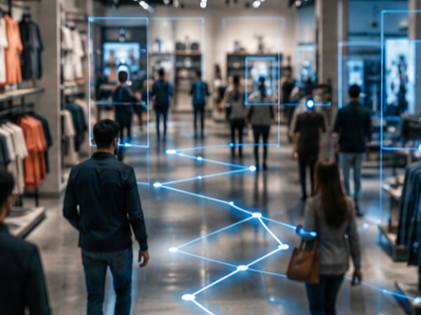
AI systems convert raw video footage into structured.
They identify behavioural patterns as:
Improve operational efficiency by enabling faster responses, better monitoring, and more proactive security management.
Video data can be analysed to generate insights that support smarter decision-making, safety improvements, and better resource planning.
Video analytics can reduce human workload by automatically filtering and highlighting only relevant events from large amounts of footage.
AI changes this by continuously analyzing video feeds in real time. Instead of simply collecting footage, AI systems can identify patterns, detect trends, and generate insights that support better business decisions. This transforms surveillance from a security tool into a strategic business asset.
Modern retailers generate enormous amounts of data every day, yet much of it remains untapped. While businesses often analyze sales reports, inventory records, and customer transactions, video footage is frequently overlooked as a valuable source of information. AI-powered surveillance bridges this gap by converting visual activity into meaningful operational insight.
Understanding Customer Movement
One of the most valuable capabilities of AI-powered video analytics is understanding how customers move throughout a store.
By analyzing movement patterns, retailers can identify:
High-traffic areas
Underutilized sections of the store
Customer flow patterns
Popular product zones
Congested areas that create friction
These insights allow managers to make informed decisions about store design, product placement, and customer experience improvements. For example, if customers consistently bypass a particular section, it may indicate poor visibility, ineffective merchandising, or an inconvenient layout.
Understanding customer movement can also help retailers improve product placement strategies. If customers consistently visit specific areas before making purchases, managers can position promotional products or high-margin items along those paths. Similarly, identifying areas that receive little attention can help businesses redesign layouts to encourage engagement and increase sales opportunities.
Identifying Risk Hotspots
Not all areas of a store carry the same level of risk. AI can analyze incident data and customer behavior to identify locations where suspicious activity occurs most frequently. These theft hotspots may include:
Blind spots with limited visibility
High-value product displays
Busy aisles with limited employee presence
Areas near exits
By visualizing risk patterns over time, retailers can deploy staff more effectively and make targeted improvements to store security. Rather than treating every area equally, businesses can focus resources where they are needed most
.Risk hotspots are not always permanent. Seasonal shopping trends, promotional campaigns, and changes in store layout can all influence where suspicious activity is most likely to occur. By continuously analyzing data, AI systems help retailers stay ahead of emerging risks rather than reacting after losses have already occurred. This dynamic approach allows businesses to adapt their security strategies based on real-world conditions.
Improving Staffing Decisions
Many retailers struggle with scheduling staff efficiently. Too few employees can increase security risks and reduce customer service quality. Too many employees can create unnecessary labor costs.
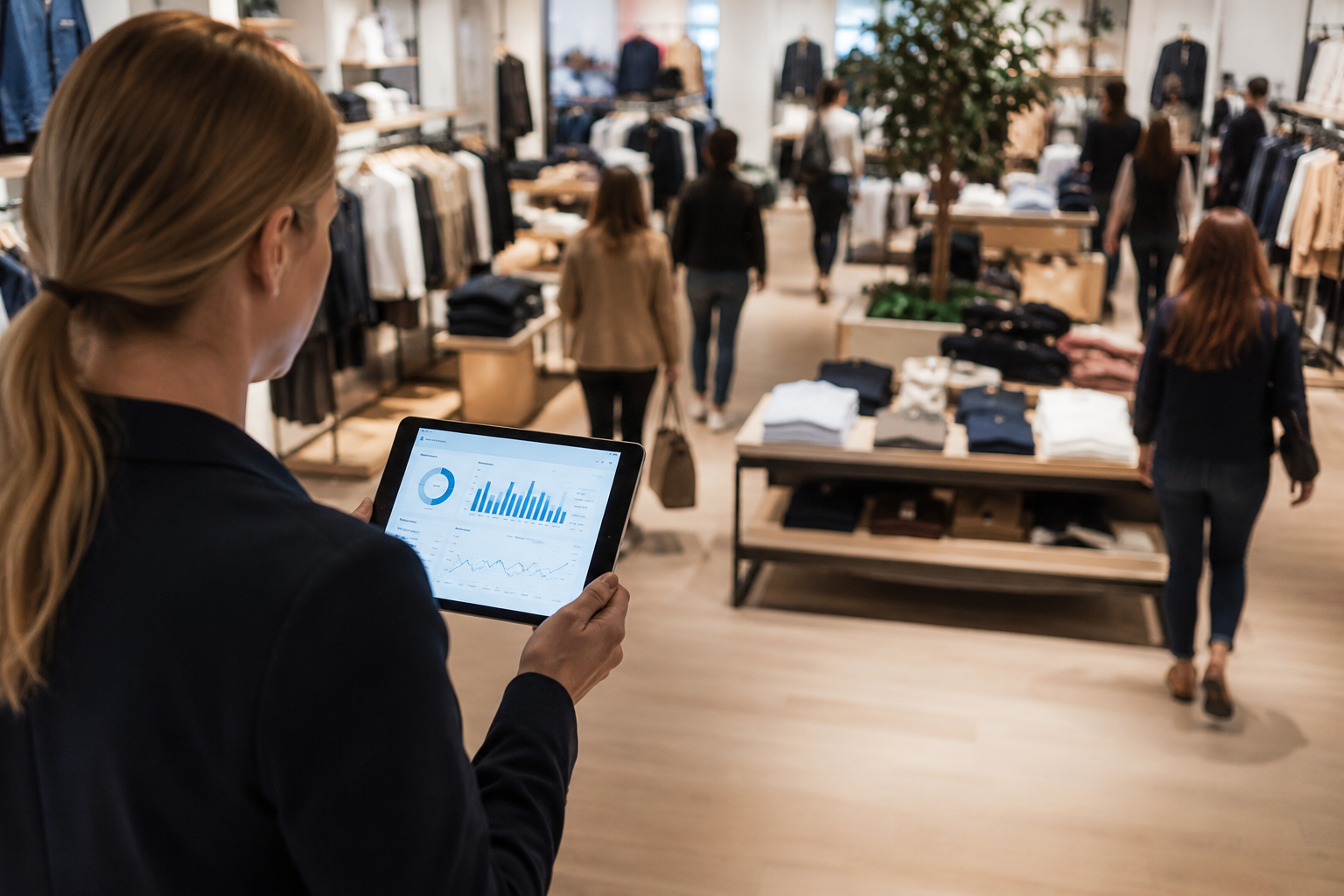
AI-powered video analytics helps track real-time foot traffic.
Instead of relying only on historical sales data, systems like XVeillance enable more accurate forecasting of peak hours, helping reduce both understaffing and overstaffing.
By analysing customer movement patterns and dwell times in different store areas, businesses can identify where staff presence is most needed, such as checkout zones, entrances, or high-traffic sections.
With better data, retailers can align staffing levels with actual store activity, improving both operational efficiency and security.
AI-powered analytics can help managers understand:
Peak traffic hours
High-risk periods
Customer density throughout the day
Areas requiring increased employee presence
Effective staffing goes beyond simply having enough employees on the floor. Managers need visibility into where employees are needed most and when additional support may be required. AI-generated insights help retailers allocate resources more strategically, ensuring that customer service standards remain high while maintaining strong security coverage throughout the store.
Measuring the Impact of Store Changes
Retailers frequently make adjustments to store layouts, promotional displays, and product placement strategies.
However, determining whether those changes are successful can be difficult. AI surveillance analytics provide measurable insights by showing how customer behavior changes after modifications are implemented.
Managers can evaluate:
Changes in customer traffic patterns
Engagement with promotional displays
Time spent in specific sections
Improvements in visibility and accessibility
This allows businesses to make data-driven decisions rather than relying on assumptions.
This ability to measure results is particularly valuable in today's competitive retail environment. Instead of relying solely on sales performance to judge success, retailers can gain a deeper understanding of customer engagement and behavior. These insights help ensure that future investments in store improvements are backed by evidence rather than guesswork.
Reducing Loss While Increasing Profitability
Loss prevention and business growth are often treated as separate objectives. In reality, they are closely connected. The same AI technology that helps identify suspicious behavior can also reveal operational opportunities. By understanding how customers interact with the store environment, retailers can reduce shrinkage while creating a better shopping experience.
When retailers have access to accurate behavioral data, they can make smarter decisions across multiple areas of the business. Improved product placement, better staffing allocation, and more effective loss prevention strategies all contribute to stronger financial performance. As a result, AI surveillance often delivers value that extends far beyond traditional security objectives.
The Future of Intelligent Retail Operations
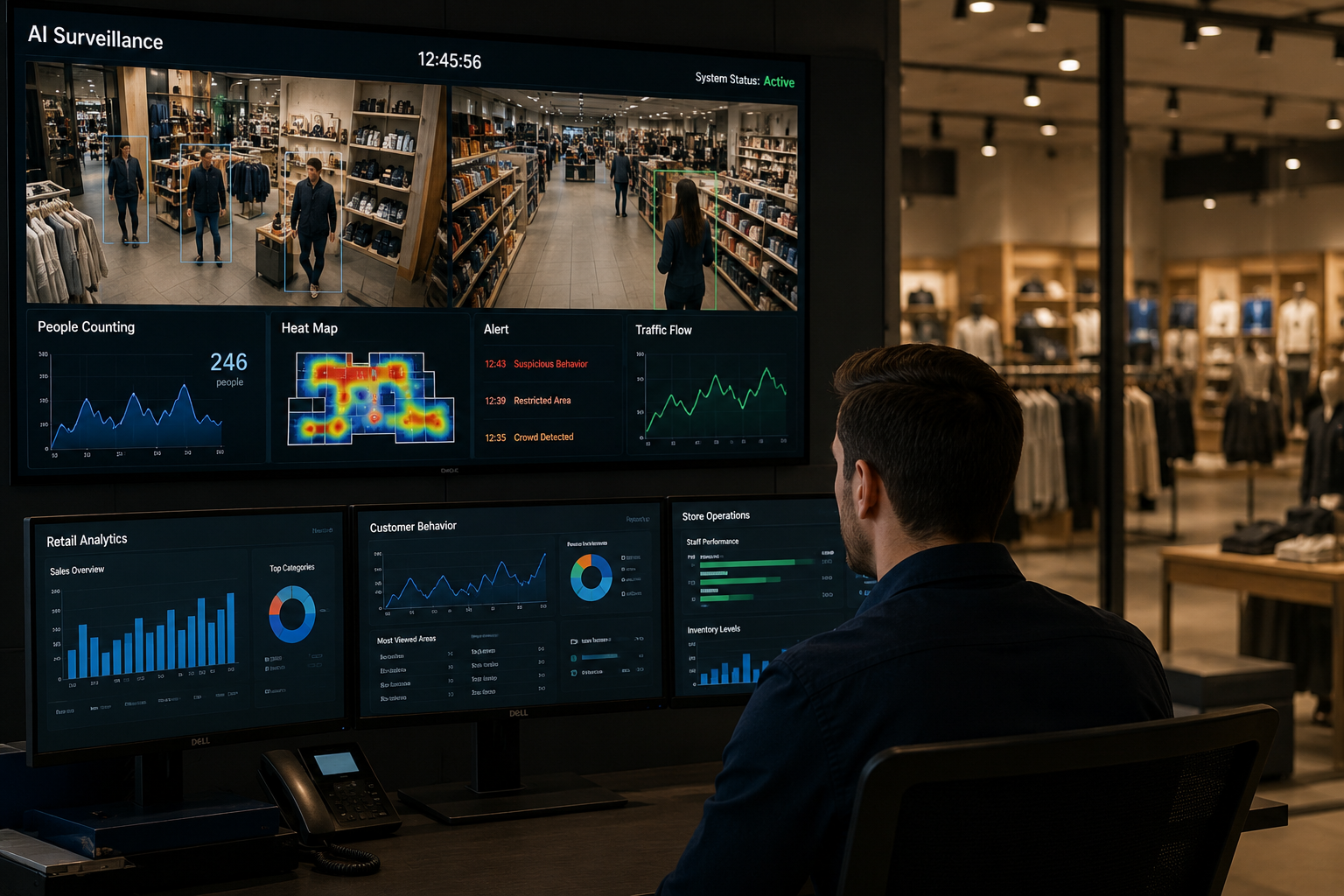
As AI technology continues to evolve, surveillance systems will play an increasingly important role in retail decision-making.
Retailers are no longer limited to using cameras as passive recording devices.
Modern AI-powered platforms transform video data into actionable intelligence that supports security, operations, and profitability.
The businesses that embrace this shift will gain a significant advantage through better visibility into what is happening inside their stores every day
.
Modern AI surveillance enables retailers to enhance security, improve operational efficiency, and make smarter data-driven decisions. Retailers are no longer limited to using cameras as passive recording devices.
The businesses that embrace this shift will gain a significant advantage through better visibility into what is happening inside their stores every day. Security cameras capture far more than incidents of theft. Hidden within that footage is a wealth of information about customer behaviour, operational performance, and store risk. The future of retail security is not just about watching what happens; it is about understanding it, learning from it, and using that knowledge to build a smarter, safer, and more profitable business.
Transform your existing security system into AI-led Business Intelligence with XVeillance.